Yes, solar can power your entire home. The right combination of panels, inverter, and battery storage means you can run all your household appliances from the sun, either fully off-grid or with the grid as a backup. The key is matching the system size to your actual consumption before you commit to anything.
How Much Energy Does a Whole House Use?
Before sizing any system, you need a clear picture of what your household actually draws. Your electricity bills are the most practical starting point: look at the kilowatt-hour (kWh) totals across a full twelve months to account for seasonal variation.
As a general reference, an average Australian household uses around 15,000 kWh per year, while a smaller household of three people might use closer to 5,000 kWh annually. Your own figure depends heavily on what appliances you run and how often you use them.
Electrical heating and cooling are the biggest variables. Dishwashers, electric water heaters, clothes dryers, and reverse-cycle air conditioning all carry high consumption loads. If you can reduce reliance on any of these through efficiency upgrades or alternative fuel sources, your required solar system size drops accordingly.
A professional energy audit will give you a room-by-room breakdown, but working from twelve months of bills is a reliable first step.
What Size Solar System Do You Need?
Once you know your annual consumption, you can match it to a system size. The figures below are approximate and vary with panel orientation, shading, and your location’s average peak sun hours.
A 1 kW photovoltaic (PV) system produces roughly 3 to 4.5 kWh per day, which works out to about 1,095 to 1,640 kWh per year. Output scales linearly, so a 3 kW system produces roughly three times that amount. Understanding how understanding kWp and kWh relate to each other helps you interpret these figures correctly when comparing quotes.
For a household using around 5,000 kWh per year, a 4 to 5 kW installation is a reasonable starting point. Homes with higher consumption, a larger family, an electric vehicle, or year-round air conditioning may need 6.6 kW or more.
It is also prudent to add roughly 20% capacity as a buffer for stretches of overcast weather or days with reduced sunlight.
Common residential system sizes in Australia are:
- 3 kW — suits low-consumption households or those mainly exporting to the grid
- 5 to 6.6 kW — the most common range for a typical family home
- 10 kW and above — suited to high-consumption households or those aiming for full energy independence
The 4 key factors to consider when buying solar panels — efficiency rating, panel type, inverter quality, and installation quality — all influence how much usable power a system of any given size actually delivers.
Why Battery Storage Matters for Whole-House Solar
A solar panel system generates power when the sun is shining, which for most households means peak output occurs during the hours when the home is often empty. Without storage, that generation either goes to waste or gets exported to the grid at a low feed-in tariff.
At night, when consumption typically peaks, there is no solar generation at all. A battery bridges that gap. It absorbs the surplus your panels produce during the day and releases it after dark, so your household can continue drawing solar energy through the evening and overnight.
Sizing the battery correctly matters as much as sizing the panels. A battery that covers your overnight load without bottoming out protects both the battery lifespan and your energy independence. A local installer can match battery capacity to your specific evening consumption patterns, which varies significantly between households.
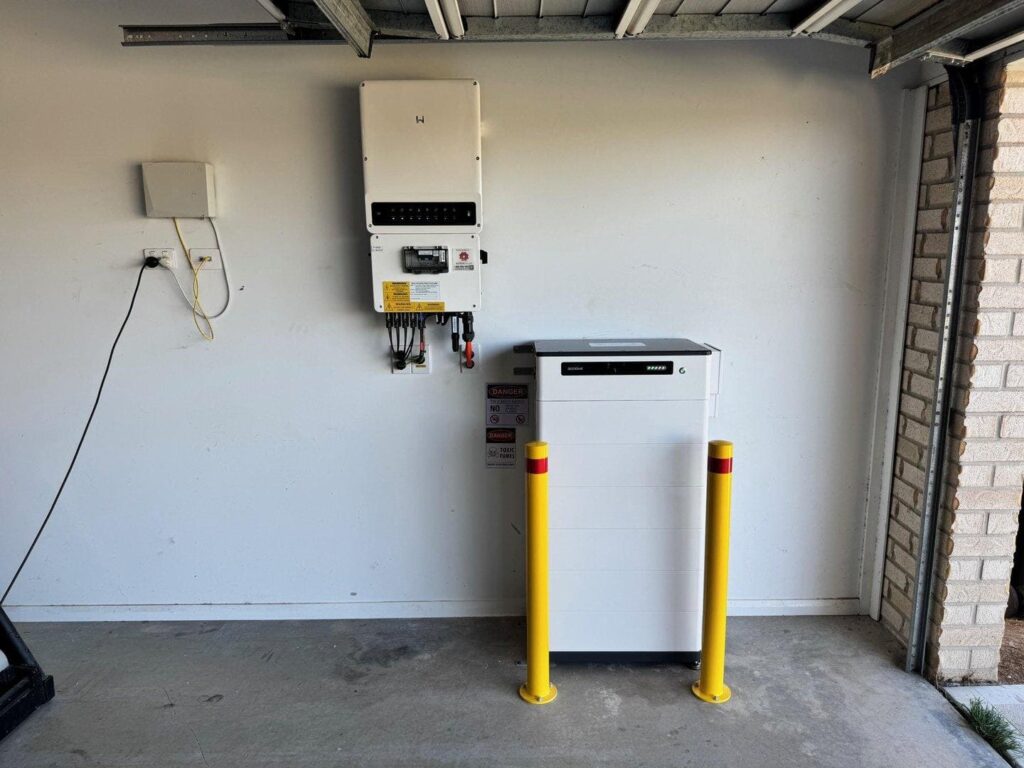
Questions around battery installation environment are worth raising early. Whether batteries need specific ventilation or temperature management depends on the chemistry and the installation location — factors that affect both safety and long-term performance.
Grid-Connected vs Fully Off-Grid Solar
There are two broad approaches to running your home on solar, and they have meaningfully different cost and complexity profiles.
Grid-connected with battery storage is the more common arrangement. Your panels and battery supply the home first. When the battery is full and excess generation is available, it exports to the grid. When the battery is depleted, the grid supplies the shortfall.
This provides resilience without requiring a system sized for your absolute worst-case consumption.
Fully off-grid severs the grid connection entirely. Every kilowatt-hour your home needs must come from your panels or battery, with no fallback. This demands a larger panel array, a larger battery bank sized to carry the home through multiple low-generation days in a row, and careful management of high-draw appliances.
The upfront investment is substantially higher, and any unexpected surge in consumption can deplete reserves quickly.
For most urban and suburban Australian homes, a grid-connected system with battery storage achieves near-energy independence at a more manageable investment. Off-grid is most practical where grid connection is unavailable or prohibitively expensive, such as rural or remote properties.
The different types of solar power systems like on-grid, off-grid, and hybrid. Each has distinct inverter and wiring requirements, which is why installation design matters before any equipment is purchased.
Preparing for Whole-House Solar
Getting the most from a solar system starts before the first panel goes on the roof. A few practical steps make the transition more effective.
Audit your consumption first. Go through your bills and note which months push consumption highest. Identify the appliances responsible and decide whether any can be replaced, reduced, or run during daylight hours.
Reduce high-draw loads where possible. Switching from electric resistance heating to a heat pump, or from an electric water heater to a solar hot water system, can significantly cut the panel and battery capacity you need.
Time your heavy loads to coincide with generation. Running the dishwasher or washing machine around midday draws from live solar generation rather than from the battery or grid.
Consult a local installer. The optimal system depends on your roof orientation, local climate, network tariff structure, and daily usage pattern. A qualified installer familiar with your area can account for all of these.
A solar battery is the component that converts a daytime-only generation asset into a round-the-clock household power supply, so it deserves as much attention in the planning stage as the panels themselves.
Powering Your Entire Home with Solar: A Summary
The answer to whether solar can power your whole house is yes, with the right system design. Here is what that process looks like in practice:
- Calculate your annual kWh consumption from your electricity bills.
- Choose a system size that covers your consumption, with a 20% buffer for low-sunlight periods.
- Decide between grid-connected-plus-battery or full off-grid based on your location and budget.
- Size the battery to your overnight and low-generation load, not just your peak output.
- Reduce high-draw electrical appliances where you can to bring the required system size down.
- Work with an accredited local installer who can account for your roof, local climate, and network tariff.
Information on residential solar power covers the full range of system options available to Australian homeowners if you want to compare configurations before speaking with an installer.
Frequently Asked Questions
Can I run my house on solar only?
Yes, but running entirely on solar usually requires battery storage and careful sizing to your consumption, or a grid connection as backup. A power audit tells you what capacity you need before you commit to any system.
How many solar panels does it take to power a house?
It depends on your yearly usage. A 1 kW PV system produces roughly 3 to 4.5 kWh per day, so a typical home using around 5,000 kWh a year often needs about a 4 to 5 kW system, plus a contingency allowance for low-sunlight days.
Larger homes or those with electric vehicles and air conditioning may need considerably more.
Do I need a battery to power my whole home with solar?
For overnight use, yes. Without storage you can only use power while the sun is shining. A battery stores daytime generation so you can draw on it through the evening and overnight, which is when most households use the most energy.
What is the difference between off-grid and grid-connected solar?
A grid-connected system uses the grid as a backup when your battery is depleted, which allows you to use a smaller, less expensive system. Off-grid cuts the grid connection entirely and requires a system large enough to meet all your needs independently, including through extended overcast periods.
What appliances make whole-house solar harder?
Electric resistance heating, electric hot water systems, clothes dryers, and ducted air conditioning are the most demanding loads. Reducing or replacing these with more efficient alternatives such as heat pumps or gas — lowers the system size you need and makes whole-house solar more achievable.